Related

Two Things Can't Be Hard: The Rule That Will Change How You Approach Every Workout
After years of coaching, certain patterns become impossible to ignore.
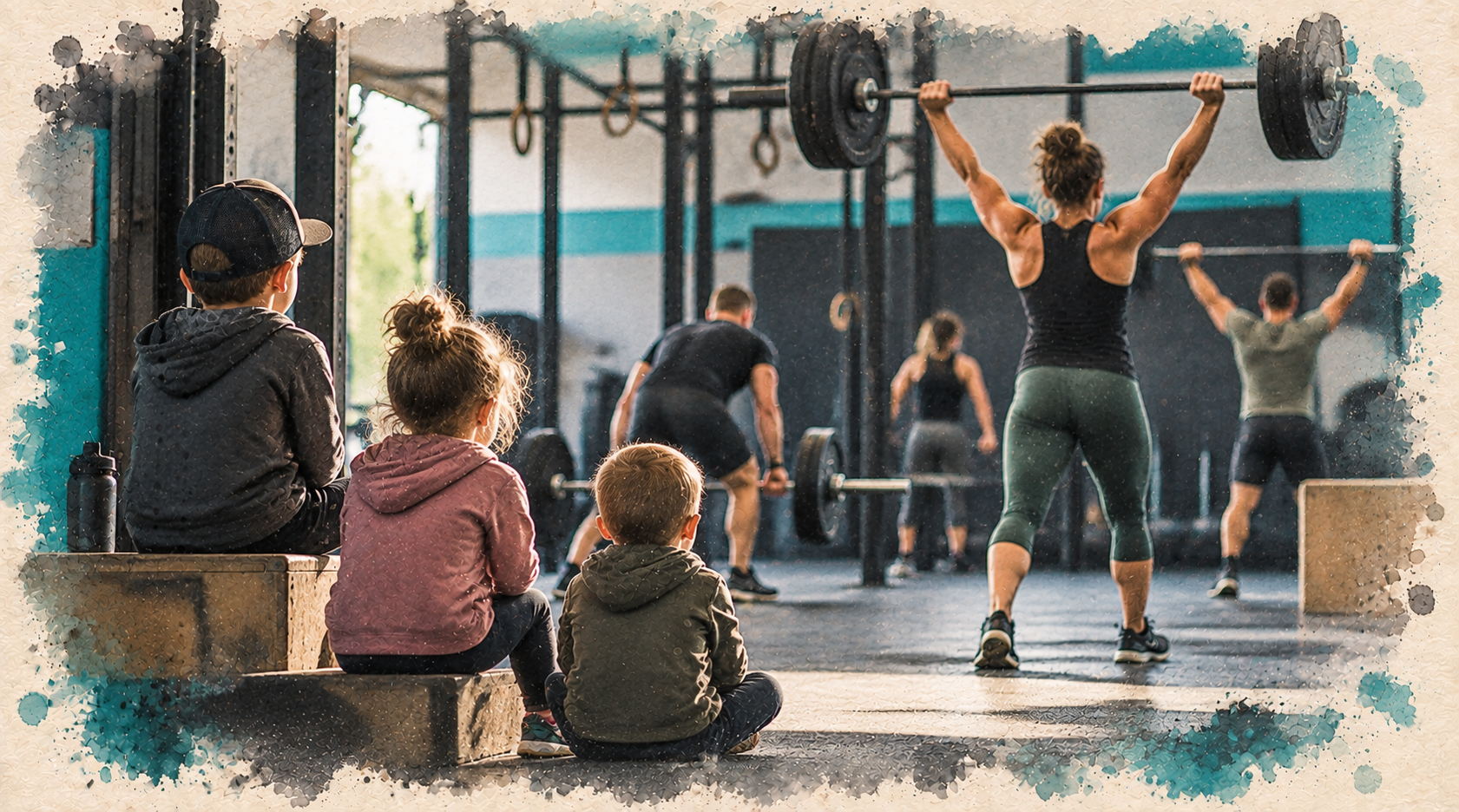
One of them goes like this: an intermediate athlete walks into class, sees the workout, and decides today is the day. They're going to go heavier than they ever have, push the pace the whole way through, and attempt the movement they've been working toward — all in the same hour. They survive it. But they finish looking less like someone who just had a breakthrough and more like someone who just got run over. The score isn't what they wanted. The movement they were excited about fell apart under fatigue. And instead of leaving the gym feeling like they did something, they just feel beat up.
I watched that pattern play out enough times that it pushed me toward a simple rule that I now give to almost every intermediate athlete I coach:
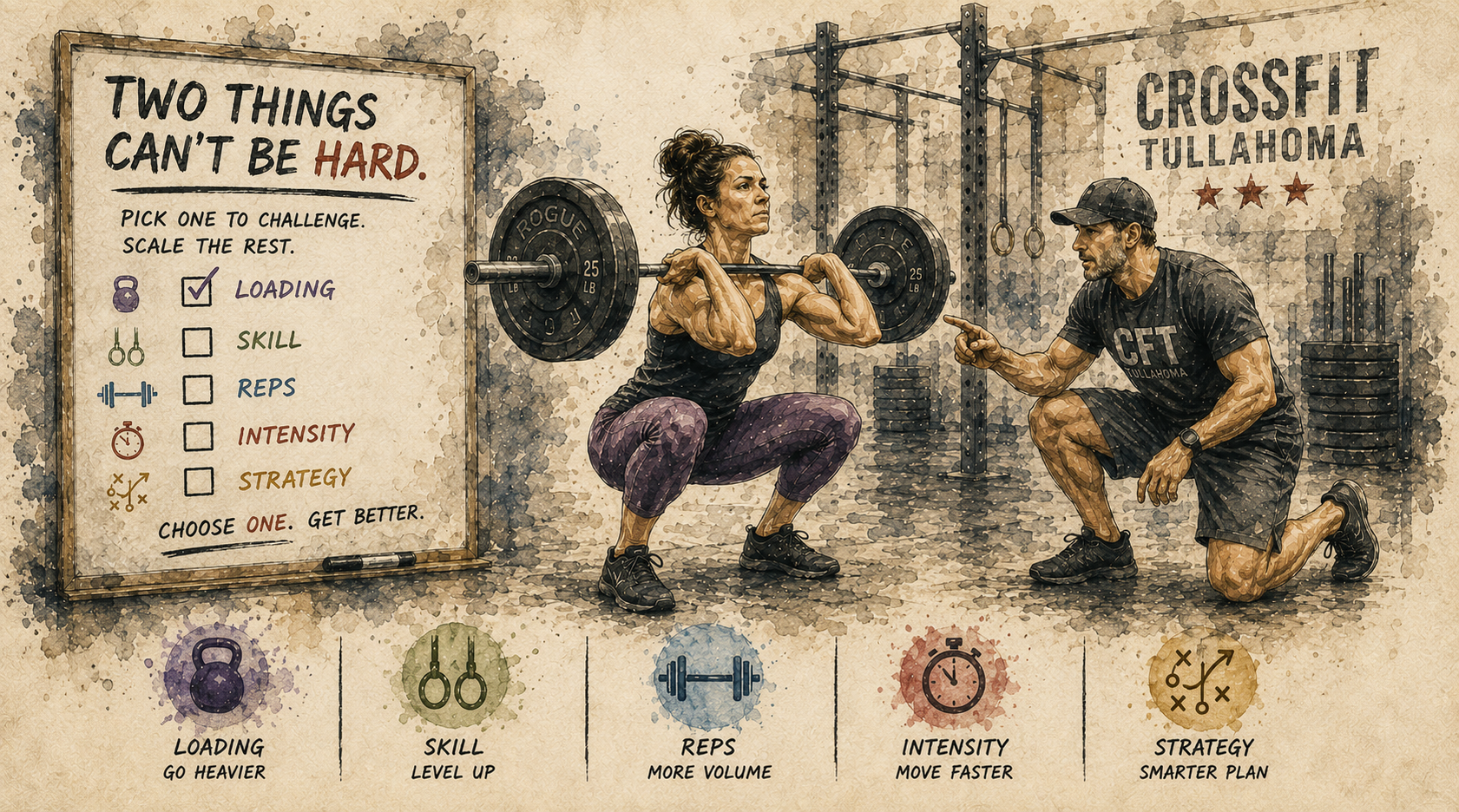
Two things can't be hard.
What the Rule Actually Means
On any given workout, you get to pick one thing to challenge yourself. One. The rest gets scaled back so it doesn't fight you.
That one hard thing can be anything — a heavier load than you'd normally choose, a movement you're working to develop, a faster pace, a more aggressive rep scheme, or a smarter strategic approach to how you're going to attack the whole piece. Any one of those variables is a legitimate place to apply a challenge. But only one at a time.
Everything else? You take it down a level. Not because you're sandbagging. Because you're protecting the conditions that give the hard thing a chance to actually work.
Why Everything Being Hard Produces Nothing
Here's the problem with going all-in on every variable at once.
When everything is hard, your body and your brain have no anchor. There's no movement you're moving well, no pace you're holding, no part of the workout that feels manageable. You spend the whole hour fighting rather than performing. The wheels come off early and they don't go back on.
More importantly, you almost always miss the intended point of the workout — the stimulus your coach designed the whole class around. A workout programmed to be fast and cyclical doesn't work if the weight is so heavy you're grinding every rep. A workout designed to develop a technical skill doesn't work if the rest of the movements are so challenging that you're too fatigued to execute the skill with any quality. When everything is hard, nothing works the way it's supposed to.
And there's a psychological cost too that I think matters more than people give it credit for. When everything is a struggle, you rarely finish feeling like a winner. You finish feeling like the workout beat you. Do that enough times and showing up starts to feel less worth it. The confidence that should be building — the quiet accumulation of little victories that keeps an athlete coming back and growing — gets replaced by a steady diet of feeling overwhelmed.
That's not toughness. That's just poor planning.
One Hard Thing Changes Everything
When you choose one thing to challenge yourself and scale everything else around it, something different happens.
Say the workout involves kettlebell swings, box jumps, and toes-to-bar. You've been working on toes-to-bar for weeks and you're close to stringing reps together. That's your hard thing today. You go for it — unassisted, at full range, pushing your current ceiling. And because the kettlebell is at a weight you can move confidently and the box jumps are at a height that doesn't slow you down, the workout stays moving. The stimulus holds. And the toes-to-bar — the thing you actually wanted to work on — gets real, quality attempts rather than a few desperate reps before everything falls apart.
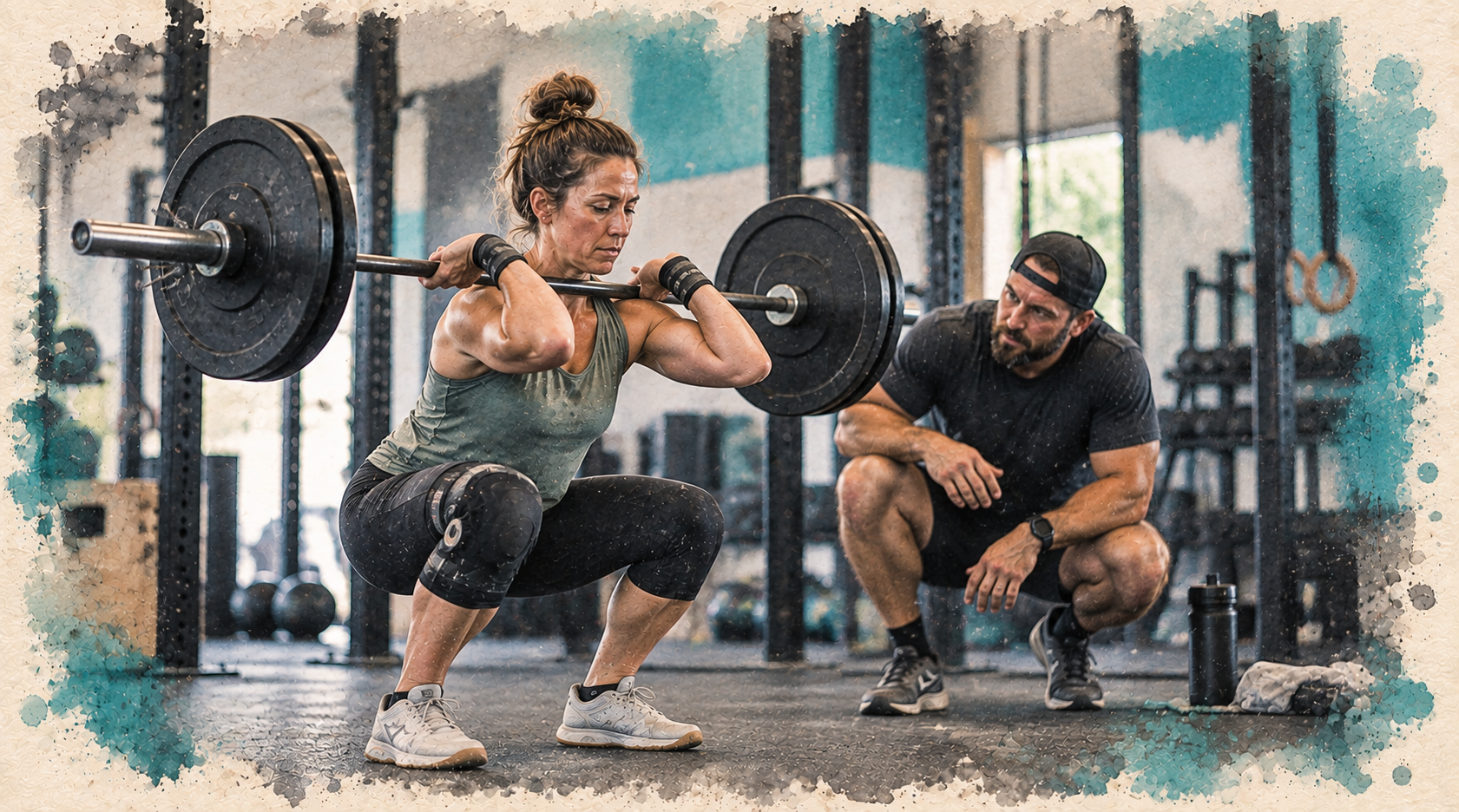
Or maybe you've been conservative on loading for months and you want to test a heavier barbell. Fine. Load it up and make that your hard thing. But bring the gymnastics volume down, keep the monostructural work at a pace you can sustain, and don't add a new movement on top of it. The load gets the challenge it deserves, and the rest of the workout doesn't punish you for making a brave decision on the barbell.
You finish the workout having actually done the hard thing. Having risen to an occasion you set for yourself. That feeling — finishing a workout and knowing you took something on and handled it — is what builds the kind of confidence that compounds over time.
The Five Variables Worth Knowing
The "one hard thing" can live in any of these areas:
Loading — going heavier than your default, testing a new working weight, challenging your current strength ceiling on a specific movement.
Skill — attempting a movement at the next level of your progression, unassisted or unscaled, even if it costs you some efficiency.
Reps — taking on a higher volume than you'd normally program for yourself on a specific movement while keeping everything else conservative.
Intensity — committing to a faster pace, shorter rest periods, or a more aggressive strategy for how you approach the workout from the first rep to the last.
Strategy — choosing a more complex game plan — specific set and rep schemes, breathing strategies, transition targets — that requires real focus and discipline to execute.
Any one of these is worth your full attention on a given day. None of them are worth combining with each other in the same workout if you want to actually walk away with something.
A Note on Who This Is For
This rule is aimed at intermediate athletes — people who have been around long enough to know the movements, understand the structure, and have some fitness under their belt. You're past the stage of just surviving class. You're starting to think about how to get better, and you're ready to make deliberate choices about your training rather than just showing up and reacting.
That's exactly the stage where this kind of intentionality matters most. Beginners are getting better just by showing up consistently. Advanced athletes have enough body awareness and training experience to manage multiple variables at once. Intermediate athletes are in the window where smart decision-making in the workout accelerates progress faster than just adding more challenge does.
Two things can't be hard is a permission slip as much as it's a rule. Permission to go after something real without needing to turn every single workout into a war.
[STORY PLACEHOLDER — Kodi to provide: an athlete who applied this rule and had a breakthrough — a movement, a load, or a performance that came together because they stopped trying to make everything hard at once]
The next time you look at the board before class, ask yourself: what's my one hard thing today? Pick it intentionally. Scale the rest without guilt. And then go do that one thing like you mean it.
You'll be surprised what happens when you give a challenge the room it needs to actually work.
Kodi Lovelace is a Certified CrossFit Level 3 Trainer and Coach at CrossFit Tullahoma, located in Tullahoma, TN. He's passionate about helping everyday people build lasting health through smart, varied, and sustainable fitness. If you have questions or want to learn more, reach out at crossfittullahoma.com and follow on Instagram @kodilovelace and @cftullahoma
Tags: CrossFit Tullahoma, CrossFit scaling, workout strategy CrossFit, CrossFit for intermediate athletes, how to scale CrossFit, CrossFit programming, fitness Tullahoma TN, CrossFit coaching tips, training smart